
The Power of Positive Thinking: Brain Research and Finding Joy in Mathematics
March 22, 2018How significant of a role does mindset play in a student’s ability to learn? New brain research out of Stanford University offers us a reminder of the power of positive thinking in mathematics.
Researchers at Stanford’s School of Medicine explored the cognitive connections between students’ attitudes toward learning mathematics and their actual achievement in the subject. Unsurprisingly, they found that students with positive attitudes were more likely to outperform their less enthusiastic peers. According to Education Dive, the more revelatory finding came when the researchers conducted brain scans:
“The researchers looked at the math skills of 240 elementary school students and also conducted brain scans for 47 of them. They found that in those who had a more positive attitude toward math, the hippocampus part of the brain — which is associated with learning and memory — was more active. The scientists suggest, in fact, that positivity is at least as important as IQ in math achievement.“
Many factors affect students’ attitudes toward learning, but feeling ill-prepared can drive negative thought and self-perception about our abilities. Expecting students to get tested on concepts when they lack the requisite skills can create stress, anxiety, and frustration. So how can schools create an environment that helps students find more joy in the learning process? Shifting to a personalized learning model is one catalyst. Educators often share stories of students becoming more confident and motivated as they become accustomed to customized learning paths and make progress toward individual goals.
There are many ways that teachers can augment the personalized learning experience. Below are stories about how teachers at two Teach to One partner schools are doing just that.
Playing Games in Passaic
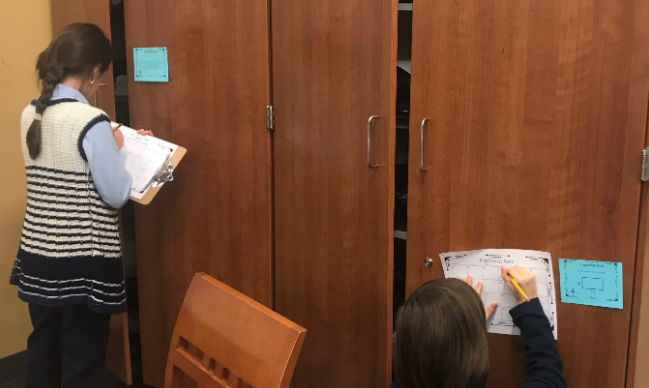
Jackie Capote and Kristen Giblin believe math should be interactive and fun, and they are always on the lookout for ways to do that at Passaic Gifted and Talented Academy. Over time, they’ve developed a range of math-related activities and games that allow students to practice their skills and take more ownership. “When students are just listening to the teacher, they’re not as actively engaged as when they are moving around and participating in their learning,” says Capote.
Scavenger hunts are one way they’ve integrated active learning into the student experience. Capote and Giblin say the session typically starts with a short mini-lesson, but soon the students head off on their hunt with clipboards and answer sheets. The teachers print math word problems and tape them in hidden areas around the room ahead of time (Check out these word problem examples for Order of Operations). Students are expected to use the answer sheets to record their work as they make their way across the room. The hands-on approach does more than get the students up and moving, Capote and Giblin say. It also creates a friendly competition among students that makes the activity more exciting and adds a little extra incentive to finish.
“They love to feel more involved in their learning,” Giblin says.
Celebrating Success: High Flyers @ Romano Butler
John Lanphear and his colleagues at Romano Butler are on a mission to build a positive learning culture with high expectations. To realize their big-picture vision, the team has intentionally thought small, breaking long-term planning into bite-sized steps.
One of the most noticeable changes is the addition of a colorful bulletin board that Romano Butler teachers and students call the “High Flyers Board.” The purpose, Lanphear says, is to put a spotlight on students who perform above and beyond in Teach to One: Math. Lanphear and his colleagues regularly update the High Flyers Board, and getting added has become a point of pride among the students.“ Kids pay attention to it now because they really want to be on it and it’s right outside the classrooms for everyone to see,” Lanphear said.
The High Flyers Board is part of a broader effort to recognize and celebrate exemplary student work. Inside the classroom, the Romano Butler teachers take moments at the end of class–as students are finishing their online exit slip assessments–to highlight those who hit their individual learning goals. The culture of celebration has spread to students, who now are quick to praise each other.“ Even though students are working on different material, they are talking a lot more about their progress and celebrating when they reach their goals,” says Lanphear.