Teach to One is reimagining the teacher’s role in a motivating, sustainable way
September 06, 2022
By The 74

LOUISVILLE, KY - JANUARY 11: A teacher interacts with students virtually while sitting in an empty classroom during a period of Non-Traditional Instruction (NTI) at Hazelwood Elementary School on January 11, 2022 in Louisville, Kentucky. Jefferson County Public Schools, along with many other school districts in the US, have switched to NTI in response to severe staffing shortages caused by the prevalence of the omicron variant of COVID-19. (Photo by Jon Cherry/Getty Images)
In “Teachers Want to Quit Because They’re Unhappy and Unfulfilled. Here’s One Fix,” Michael B. Horn gives Teach to One as an example of the role of the teacher reimagined for sustainability and fulfillment. In the Teach to One team environment (as implemented in Elizabeth Public Schools), teachers’ workloads are shared through a true teacher team. The team co-teaches, creating a support network for students, rather than leaning on the one-to-many teacher-to-student model.
Adjustments like those made possible through Teach to One show an understanding of what motivates teachers and how to shift the paradigm in ways that make the teaching profession more sustainable and gratifying. Read more from Michael B. Horn in The 74.
Want to learn more about how we’re reimagining education?
Latest Posts
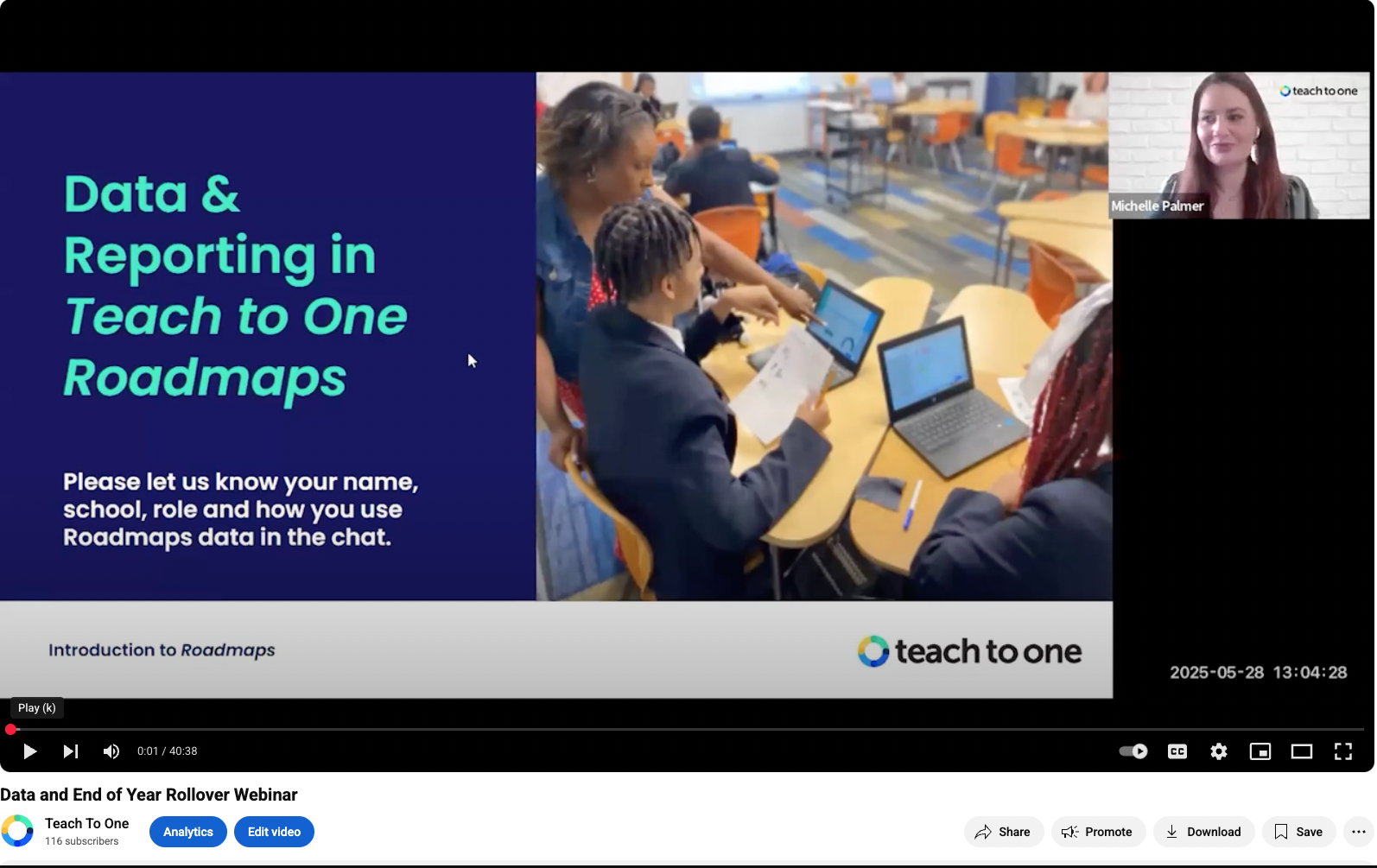
Recording: Data and End of Year Rollover Webinar
In this 45-minute webinar recording, Michelle Palmer, Senior Director of Customer Success, and Liat Greenspan, Associate Director of Program Success, explain how to assign a skill or pathway, use the Teacher Dashboard to identify struggling students, leverage the Reports Hub for weekly planning, and monitor growth and engagement on the Progress Page.

Getting Students Engaged in Math at Valley Charter
Students arrive at their assigned seats equipped with laptops and individualized Teach to One Roadmaps packets, which include a work time poster, a note-taking sheet, and graph paper.

Webinar Recording: Unlocking Algebra
On Tuesday, May 13, TNTP and New Classrooms released the report: Unlocking Algebra – What the Data Tells Us About Helping Students Catch Up. On the same day Adam Meier, Partner, Research Center of Excellence, TNTP, and Joel Rose, Co-founder and Chief Executive Officer, New Classrooms, presented the findings, recorded in the webinar below. Looking […]
