Personalizing the Path for Children of Military Families
January 23, 2020
By Teach to One
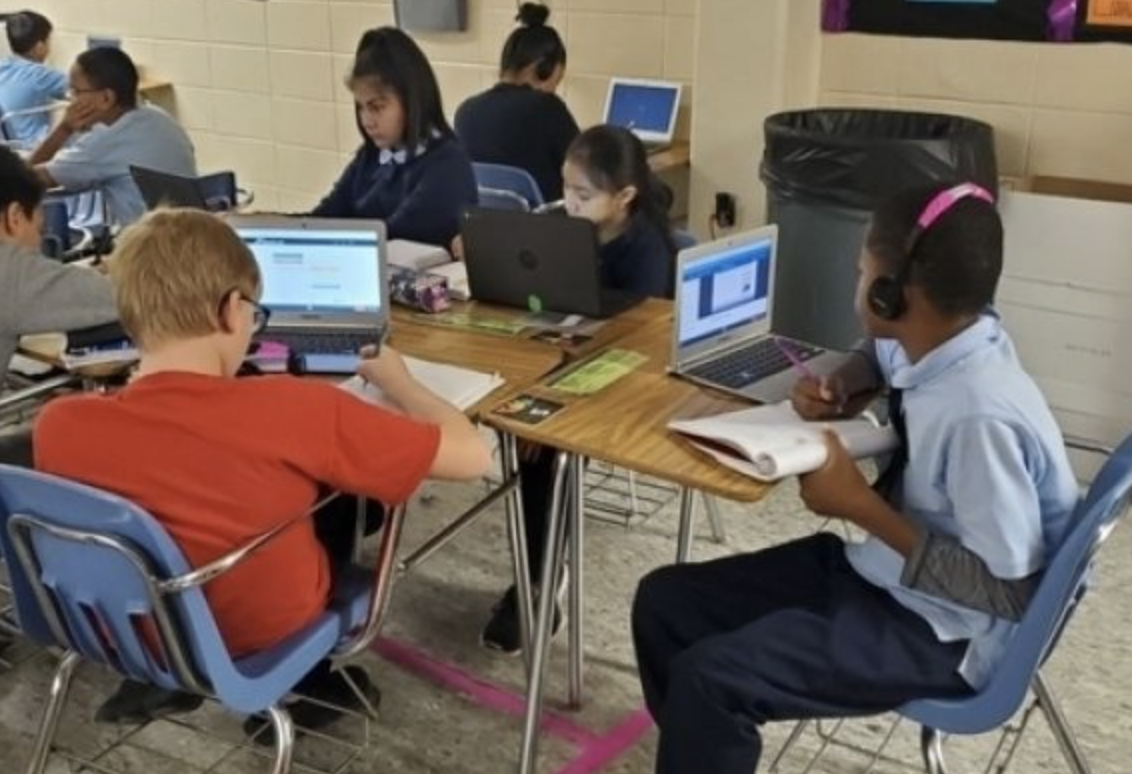
At Teach to One, we have the privilege to work with schools like LEARN 6 and LEARN 10 in North Chicago, Illinois, where a significant percentage of the student population comes from military families.
Many of these students do not remain in the same place for long, so the challenge of providing them with a quality educational and social experience is factored into the DNA of both schools. Samantha Martin is the Math Director for LEARN 6 Charter School, located on the Great Lakes Naval Station. As head of the math department, Martin sees firsthand how the school is shaped by its direct proximity to the military.
“The fact that our students face a different set of challenges, such as parents leaving for deployment, parents returning from deployment, moving frequently, et cetera, is definitely one piece of our school culture,” says Martin. “For our school culture as a whole, I would say the biggest impact is the amount of turnover in our students.”
Children of military families often leave one school to begin attending another in the middle of the academic year. Most schools are on a set progression, and while this comes with its share of challenges in all core subjects, this is especially problematic in math. Since math is inherently cumulative—new skills build upon established skills—students who enter the classroom with unfinished learning from prior weeks, months, or years are far less likely to recover from this missed content. Schools rarely have the time or resources to diagnose exact skill levels for mid-year entries, so with each transition to a new school, these students are increasingly likely to fall further and further behind.
Read the full article on the Next Generation Learning Challenges blog here.
Latest Posts
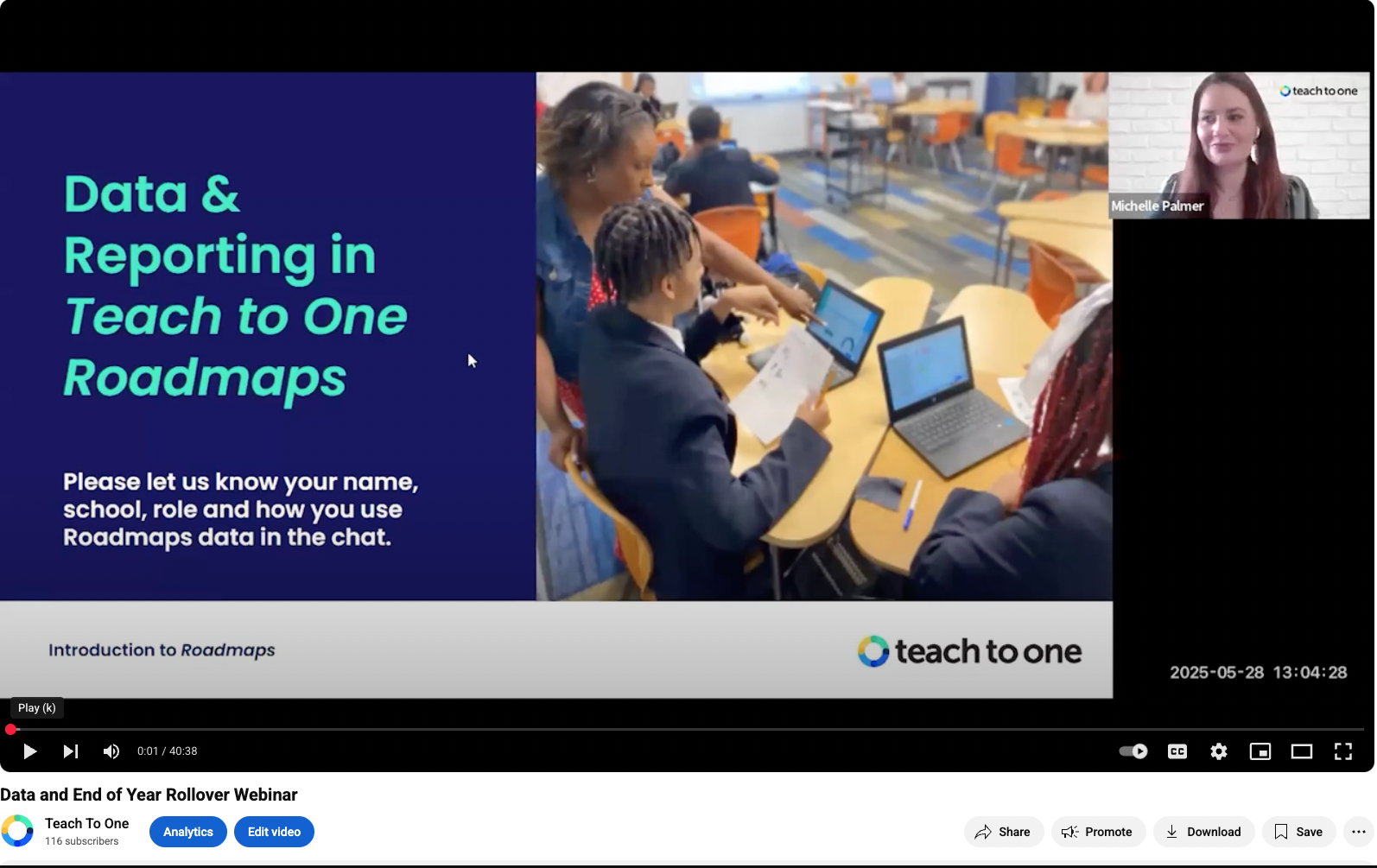
Recording: Data and End of Year Rollover Webinar
In this 45-minute webinar recording, Michelle Palmer, Senior Director of Customer Success, and Liat Greenspan, Associate Director of Program Success, explain how to assign a skill or pathway, use the Teacher Dashboard to identify struggling students, leverage the Reports Hub for weekly planning, and monitor growth and engagement on the Progress Page.

Getting Students Engaged in Math at Valley Charter
Students arrive at their assigned seats equipped with laptops and individualized Teach to One Roadmaps packets, which include a work time poster, a note-taking sheet, and graph paper.

Webinar Recording: Unlocking Algebra
On Tuesday, May 13, TNTP and New Classrooms released the report: Unlocking Algebra – What the Data Tells Us About Helping Students Catch Up. On the same day Adam Meier, Partner, Research Center of Excellence, TNTP, and Joel Rose, Co-founder and Chief Executive Officer, New Classrooms, presented the findings, recorded in the webinar below. Looking […]
