Next Generation Learning Challenges publishes “The Anatomy of a Math Skill”
April 06, 2022
By Next Generation Learning Challenges
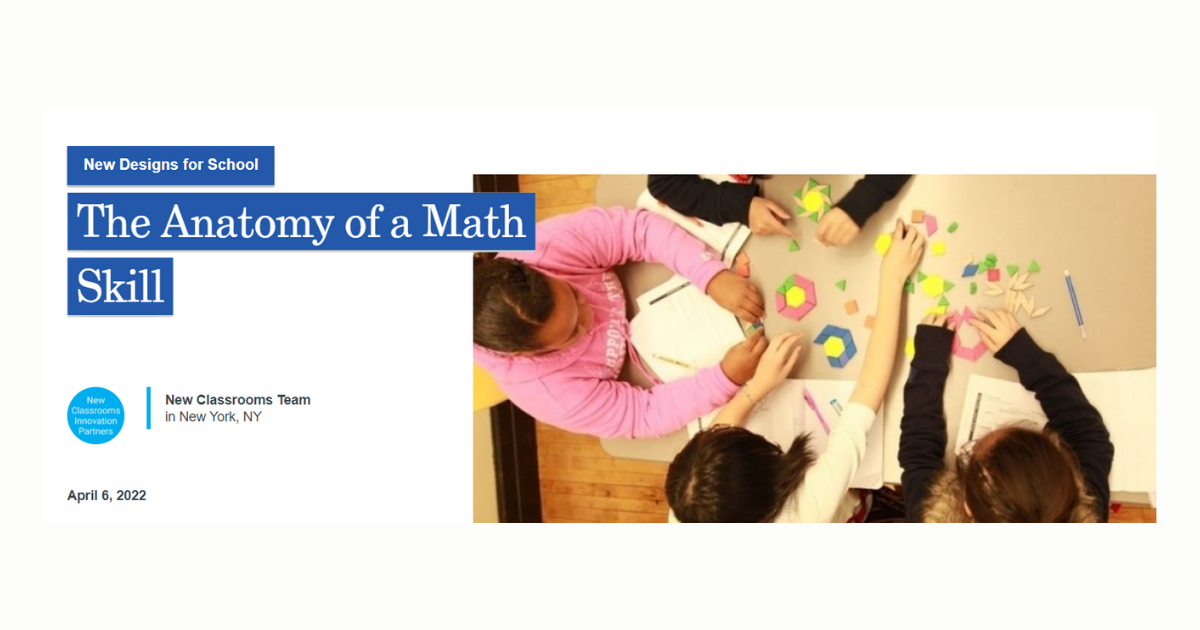
For more than a decade, our team of academic experts, curriculum developers, and technologists have been obsessed with understanding, at precise levels, the connections between mathematical skills and what it takes for students to authentically learn them. We’ve developed a math concept map that allows teachers and students to examine the interrelated nature of mathematics and how a student’s year-long learning plan can be shaped. This work has been highlighted by Neil Heffernan, of the Worcester Polytechnic Institute, who says,
“The map itself is a formidable asset on the broadest spectrum, between kindergarten and 12th grade, and I encourage educators, policymakers, and researchers to use it to guide their practice and decision-making.“
On April 6, 2022, Next Generation Learning Challenges published our detailed look at the anatomy of a math skill and procedural, conceptual, and applied dimensions of understanding. This is foundational to knowing where students are in order to get them to where they need to be. Identifying the skills students know (pre-, on-, and post-grade) and the depth in which they understand these skills (procedural, conceptual, and applied knowledge) is critical to giving students a pathway to catch up or get ahead.
With Roadmaps, Teach to One provides a free adaptive diagnostic assessment in math for grades four through algebra to understand the precise pre-, on-, and post-grade skills students need to achieve proficiency. Then, students, teachers, and even families can access instructional tools and high-quality, curated content from multiple providers aligned to each student’s individualized roadmap to support them in the classroom and at home.
Latest Posts

Building a Culture of Engagement Through Student Agency
Our middle school in the Bronx is always striving to be a place where students can take ownership of their own learning. Often in education, words such as “engagement” and “agency” are just overused buzzwords—but at the South Bronx Early College Academy (SBECA), we believe this mindset is crucial for adolescent learning.
Data-Informed Instruction: A Formula for Success
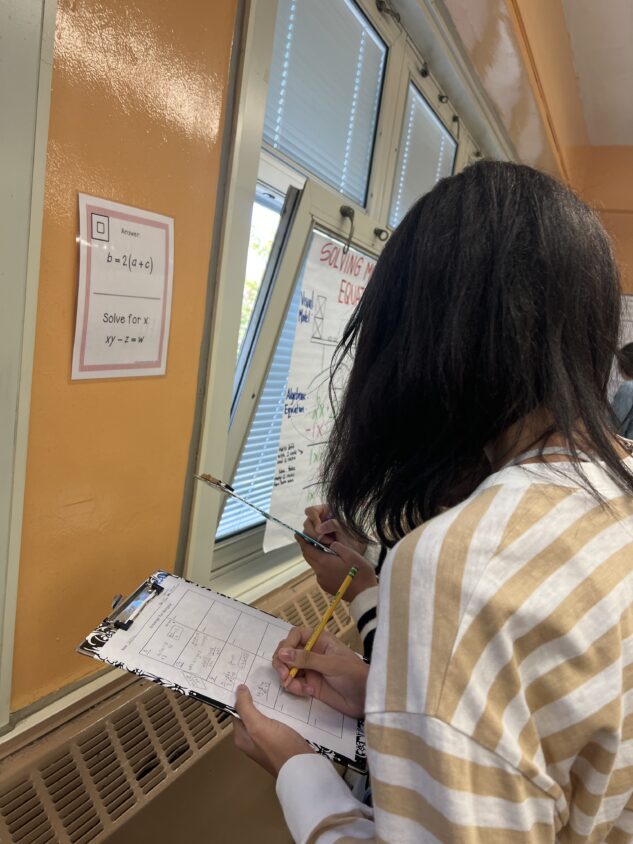
In my classroom, kids don’t need more work—they need the right work. By using quick formative assessments like exit slips at the end of each class, I gather real-time data to guide flexible, responsive grouping for the following week. It’s all about solving for what students need, not just assigning pages from the book.

Inside the Roadmaps Impact Study: Using Data to Validate What Works — and Inform How You Teach
The Impact Study shows how personalized learning translates into outcomes on trusted benchmarks. Because Roadmaps tracks each student’s demonstrated math skills and progress toward proficiency, the analysis shows how time spent in Roadmaps and completing skills leads to evidence of real learning.
