NCLD names Teach to One a “promising practice”
February 18, 2021
By National Center for Learning Disabilities
A National Center for Learning Disabilities (NCLD) report entitled Promising Practices to Accelerate Learning for Students with Disabilities During COVID-19 and Beyond featured Teach to One 360 as one of its “promising practices,” naming it alongside tailored acceleration as a “holistic math instructional model that leverages analytics from historical learner patterns and individual learner attributes to create a custom math curriculum.” NCLD goes on to say:
“Teach to One’s adaptive technology develops individualized learning progressions that are updated regularly as teachers conduct short, formative assessments. Students engage in flexible groupings and in different teacher-led, student collaboration, and independent modalities based on their mastery of various math skills. Students get more time to develop prerequisite skills while still being exposed to grade-level content. Various schools have adapted the Teach to One approach to address restrictions related to COVID, and have demonstrated how to implement the model in blended or distance learning environments.”
Latest Posts

My Seven Bosses and their Sixth-Grade Teacher
Our Research and Development team working on Teach to One Roadmaps at New Classrooms has had, admittedly, some crazy ideas. I tend to get a lot of latitude, but I’ve recently been subjected to weekly performance reviews where I’m told, multiple times, that my work isn’t good enough.

Building a Culture of Engagement Through Student Agency
Our middle school in the Bronx is always striving to be a place where students can take ownership of their own learning. Often in education, words such as “engagement” and “agency” are just overused buzzwords—but at the South Bronx Early College Academy (SBECA), we believe this mindset is crucial for adolescent learning.
Data-Informed Instruction: A Formula for Success
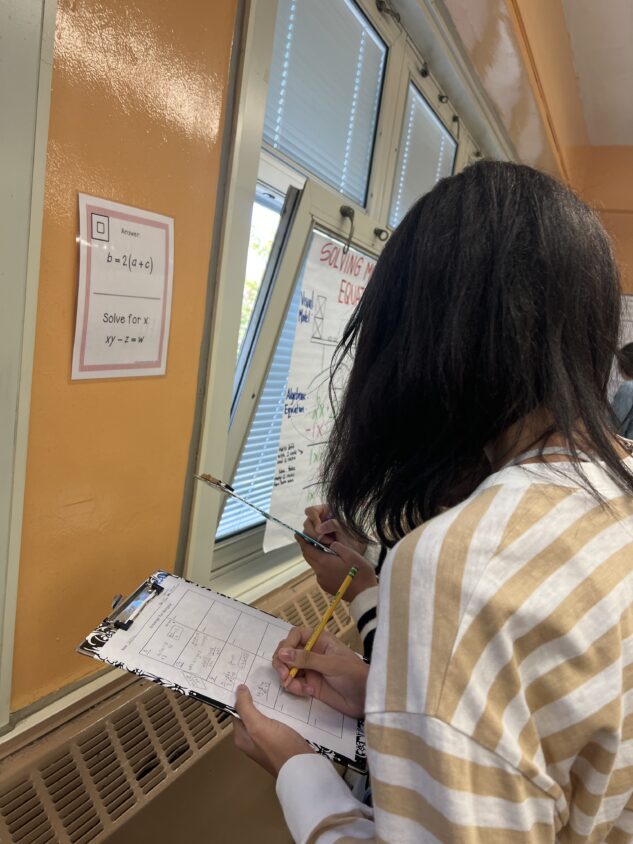
In my classroom, kids don’t need more work—they need the right work. By using quick formative assessments like exit slips at the end of each class, I gather real-time data to guide flexible, responsive grouping for the following week. It’s all about solving for what students need, not just assigning pages from the book.
