Kids Learn Math At Their Own Pace In This Denver Middle School
December 15, 2015
By Colorado Public Radio
By: Jenny Brundin, Colorado Public Radio
Many American students struggle in math. And the statistics show it: High schoolers who take international math tests ranked 36th in the world.
I could have been part of this statistic. When we got to permutations, combinations and binomial theorems in my high school math class, I just hid in the back of the classroom. Mr. Yeske only paid attention to the kids at the front anyway. So I slipped further and further behind.
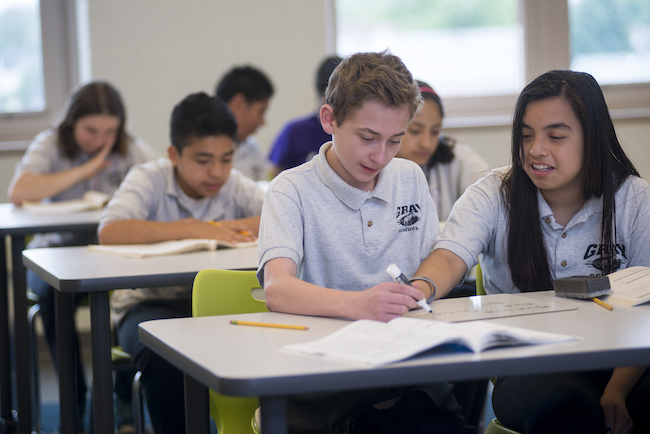
Morey Middle School principal Noah Tonk says this is how thousands of students fall through the cracks, and it’s why he wanted to try something new. So Morey is one of two Denver middle schools piloting a program that makes math personal.
Here’s why that’s tricky: everything in math is sequential.

Latest Posts
Data-Informed Instruction: A Formula for Success
In my classroom, kids don’t need more work—they need the right work. By using quick formative assessments like exit slips at the end of each class, I gather real-time data to guide flexible, responsive grouping for the following week. It’s all about solving for what students need, not just assigning pages from the book.
Inside the Roadmaps Impact Study: Using Data to Validate What Works — and Inform How You Teach
The Impact Study shows how personalized learning translates into outcomes on trusted benchmarks. Because Roadmaps tracks each student’s demonstrated math skills and progress toward proficiency, the analysis shows how time spent in Roadmaps and completing skills leads to evidence of real learning.
Planning with Purpose
Instead of guessing what to reteach or relying only on assessments, I can see where my students are in real time. This makes my planning more intentional, my small-group time more effective, and my differentiation more meaningful.